 Image: Blog hero Plant Plate 09 boys dig in
Constructing New Spaces Leads to Improved Community Connection
by Blandin Foundation Posted in Grants, Rural Placemaking
A small, rural folk school in Grand Marais has grown into a global resource for community and human connection.
When North House Folk School first drew up plans for an expansion, they knew they wanted to utilize local businesses and community members for as much of the work as possible in a way to give back to their Northern Minnesota community.
Greg Wright, Executive Director at North House, notes conversations among staff from the very beginning kept this idea central to their mission, saying, “If we’re successful, we need to keep answering this question, how can we be useful to our community?”
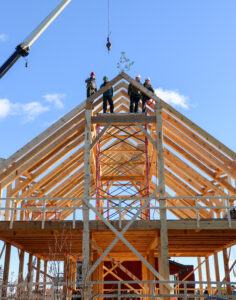 Throughout the planning and construction process, North House was sure to source the work to local businesses they could count on to do the job right, while also providing more benefit to their immediate community; those community connections led to a more collaborative process between North House and the contracted businesses. Wright says they hired local, from freshly milled white pine timbers and contractors to instructors and students completing the new building’s timber framing.
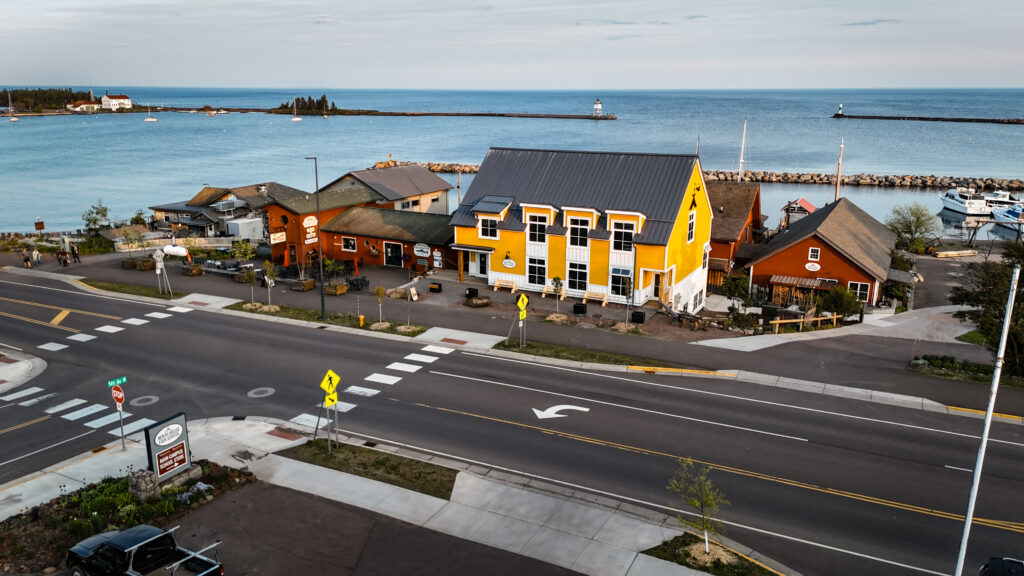
The result of project Framing the Future: a newly improved campus – and outlook – designed to foster connection through the inspiration of traditional craft. North House Folk School went from a small campus limited by their size to the welcoming face of Grand Marais.
“I’ve literally had community members say to me, ‘Greg, you know, one of the things I love is now when people arrive in our community, they are greeted by North House Folk School. And that’s who you are now, Greg. You are an iconic element of our community. You project our story to the world.’ And as a visitor-based community, a community that makes a living by hosting people from all over the world, this is really key.”
With the new, larger classrooms, North House has been able to address some of their longest standing concerns: how to serve more students while helping artisan instructors make a living. Now, each class allows for more student participation, creating a model that allows instructors to be paid more for their time and expertise. The new classrooms were also designed with function in mind, creating space for a wider variety of classes to be taught. The growth in the number of students is perhaps one of the most notable successes of the expansion project; Wright says they have experienced a 10% growth in both the number of students served as well as the number of days students are in class.
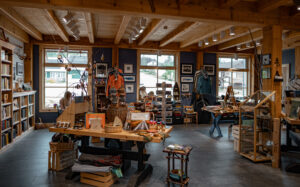
Aside from just more classroom space, North House’s school store nearly doubled in usable square footage, creating more space for students to check-in and purchase supplies, as well as more room for instructors and local artists to sell their work. This updated space serves as a warm welcome to the public, making North House’s presence better known and greeting visitors as they come into town.
The new building has not only been a positive change for students and artists, but also for the staff that keep North House running. After reconfiguring the day-to-day layout, the new building made room for staff to have their offices on the main campus, thus putting them more centrally in the day to day operations of the school, while also moving intern spaces to a more private area across the street, away from the hustle and bustle of the students, and giving space to work on their own craft and art.
All these changes have had huge impacts on North House’s success in obvious ways, but they aren’t the only ones who have benefited from their growth. Over the years, the local community has noticed North House’s year-round success, something that doesn’t go unnoticed in a largely tourist-centric town. Wright says that the school is as busy in February as it is in August, noting how that’s nearly unheard of in Northern Minnesota communities.
A history rooted in rural placemaking
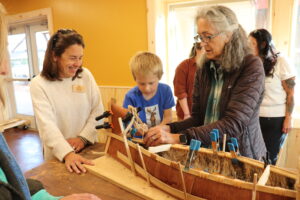
North House hasn’t always been as busy as it is now; over the past three decades, there has been immense growth that has cemented North House as a widely known and respected institution for northern craft. This is a notable transition from their humble beginnings in 1997, when a team of volunteers planned and scheduled 23 classes over the course of six months for local community members and artists to come together, learn new skills, and connect with one another. Now, nearly 30 years later, North House Folk School has expanded its offerings to almost 400 classes a year, serving students from across the globe.
With an increasing interest from more students, it was time for North House to expand their campus in Grand Marais. In 2020, the school proposed their expansion project, called Framing the Future, garnering support from the local community, as well as students and artists from across the country. The excitement for their project was high. Then, the pandemic hit, forcing the school to pivot their fundraising efforts alongside figuring out how to remain open to students and artists through uncertainty.
These challenges didn’t stop them. After successfully moving many of their classes to an online format, and refiguring in-person class models to accommodate health and safety measures, North House found a way to continue doing what they do best: bringing people together.
Their campus expansion project moved forward in full force. Even with the support of their loyal community, both near and far, North House knew they needed to seek help for the funding of this project. Through community funding initiatives and grant awards, like Blandin Foundation’s $125,000 contribution, North House reached their funding goals on time, keeping the project moving forward at their desired pace.
“North House didn’t do this on our own,” said Wright. “I mean, places like Blandin said, ‘we’re in on that adventure.’ Since we launched in 2020, we were successful in securing $7 million to power the operations and the physical evolution of campus.”
In the end, Framing the Future was completed on time, on budget, and on target, meaning that North House’s expansion was completed entirely on a cash basis, leaving them debt-free and in a position to better plan for future projects.
Community wealth-building strengthens future of North House Folk School and Grand Marais
With North House having the space to invite more people into the community year-round, this allows other businesses in the community to do the same, with Wright saying, “Our momentum yields momentum in other places in the community.”
The local economy has only been strengthened by North House’s growth, with their students needing access to food, lodging, gas, and more as they stay in the area to complete their course.
“15 years ago, within two blocks of our campus, there was only one restaurant that was open year-round. Today, there’s four. One new restaurant, plus two more that now have decided to be year-round businesses. Well, that’s not just good for the business, as it turns out, that’s really great for the workers and the community.”
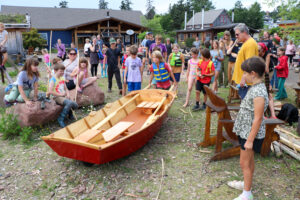
Giving back to their community has always been a top priority for North House. Every year, the school works with local third, fourth, and fifth graders, now totally free; they offer timber framing classes for local high schoolers, totally free; and they invite students to after school clubs both in Grand Marais as well as on the Grand Portage Reservation, both with the option of receiving a scholarship, no questions asked.
“In our case, executing our mission creates economic momentum. That’s cool. But it’s also touching the lives of people who live next door…I think they [the local community] appreciate that we’re committed to vitality on multiple levels.”
The power of community places, such as North House Folk School, showcases the importance of rural capital grant-making. Given the right tools and resources, and the funding to get things done, rural businesses can help transform their communities for the better.
Now, North House looks towards its future with an enhanced sense of purpose, committed to building community while also strengthening the local community, and in ways that will allow them to continue their mission of human connection during every season in the North.